January greetings!
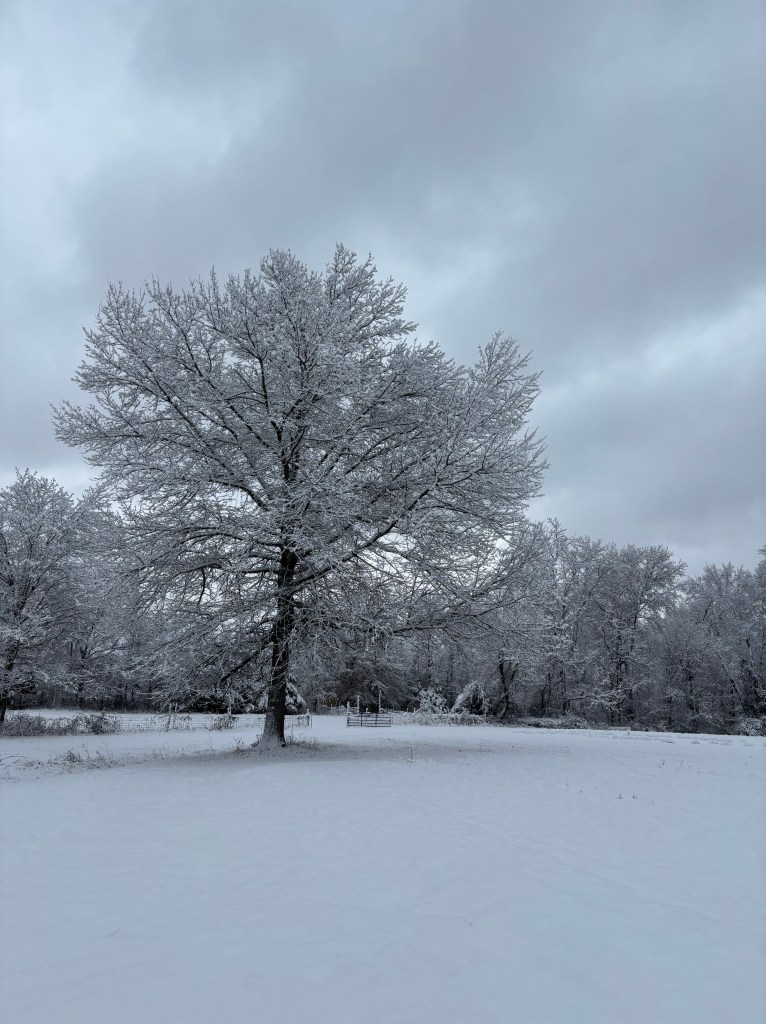
For many people, the depth of the winter months (especially in the Northern Hemisphere) is a time for hibernation and staying cozy inside. However, nature is not closed for the season – just at rest. There are many advantages to spending time in nature during seasons of cold weather.
Fresh air is still fresh in the cold weather… and possibly even healthier!
In colder temperatures, air is more dense. This means that with every breath, you are technically inhaling more oxygen molecules than you would in the humid, thinner air during a heat wave. The brain consumes about 20% of the body’s oxygen. Increased oxygen saturation helps with mental clarity and reduces the “brain fog” often associated with indoor winter heating. The American Lung Association states that indoor air in the winter is frequently 2 – 5 times more polluted than outdoor air due to sealing up our homes which results in trapping in mold, dust, allergens, particulate matter, and volatile organic compounds (VOCs) inside our homes. (1) More, less polluted oxygen, please!
Now, while extreme cold is a stressor, moderate cold exposure is shown to improve task switching and memory. For example, a brisk 15 minute walk clears out indoor air and can also stimulate brain activity. A study by the Harvard T.H. Chan School of Public Health found that even modest increases in indoor CO2 significantly decrease “Cognitive Function Scores.” Stepping outside provides an immediate “re-oxygenation” that clears this mental fog. (2)
Additionally, Muller, et al. (2012) developed the “Arousal Hypothesis”. This theory suggests that a slight drop in temperature is perceived by the body as a “challenge,” which causes the brain to devote more attention to tasks, effectively sharpening focus and vigilance. (3) Exposure to cold triggers the activation of Brown Adipose Tissue (BAT). To keep you warm, your body releases norepinephrine, a hormone and neurotransmitter. Norepinephrine is directly linked to focus, attention, and vigilance. A brisk winter walk acts as a natural “chemical reset” for a sluggish mind. There is biochemistry in being outside!
Bathing in the winter forest…
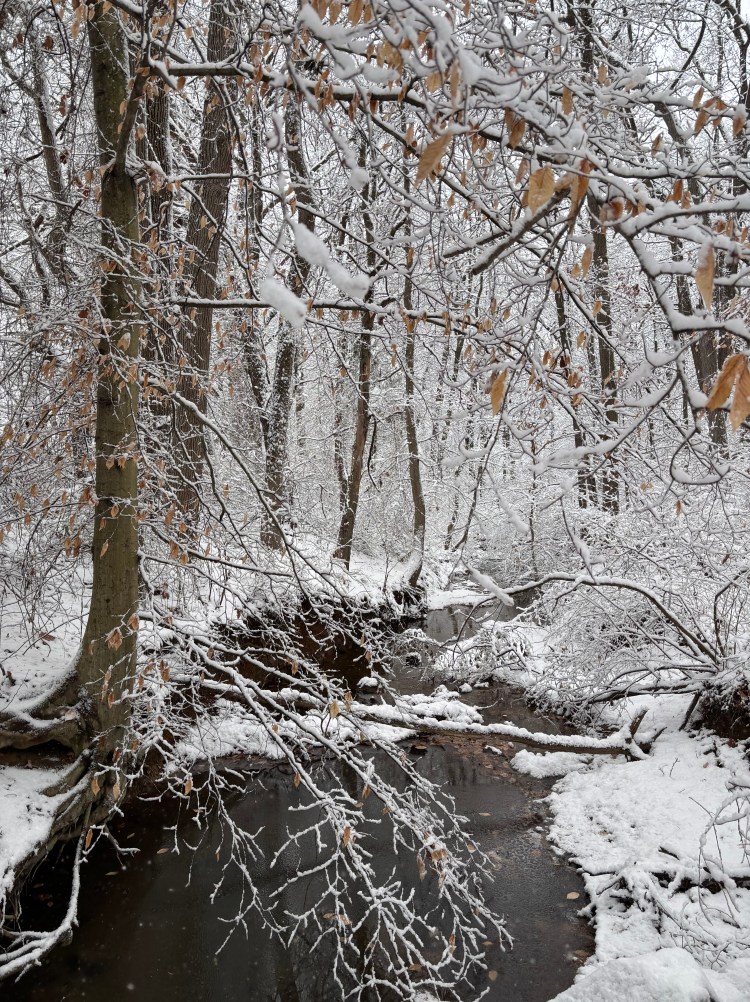
“Shinrin-yoku” or forest bathing is the Japanese practice of mindfully immersing oneself in the atmosphere of the forest, by focusing sensory connection with nature. Dr. Qing Li’s research (Nippon Medical School) confirms that even in winter, evergreen trees release phytoncides (essential oils like alpha-pinene). Inhaling these biochemicals reduces cortisol and stimulates the immune system’s “natural killer” cells. (4)
Trees release these natural oils as a defense. When inhaled by humans, phytoncides boost the body’s infection-fighting cells, and reduce stress hormones. Additionally, sensory immersion calms the nervous system and promotes relaxation by engagement with nature. This in turn leads to lowered stress hormones (cortisol), reduced blood pressure, enhanced immune function (increased NK cells), improved focus, and better night’s sleep. (4)
Here’s a challenge…
Try to spend 15 minutes briskly walking in nature (at a park, a garden, etc) once a week during the cold months. Turn off your phones and electronics and notice the world around you. Try to remember one specific thing such as the bark of a tree or a unique pinecone. Breathe deeply and reflect on how this makes you feel.
References:
- https://www.lung.org/blog/indoor-air-quality-winter
- https://healthybuildings.hsph.harvard.edu/impacts-of-indoor-air-quality-on-cognitive-function/
- Muller, M. D., Gunstad, J., Alosco, M. L., Miller, L. A., Updegraff, J., Spitznagel, M. B., & Glickman, E. L. (2012). Acute cold exposure and cognitive function: evidence for sustained impairment. Ergonomics, 55(7), 792–798. https://doi.org/10.1080/00140139.2012.665497
- https://leelanauconservancy.org/2024/08/the-therapeutic-effects-of-forest-bathing/#:~:text=Li’s%20research%20supported%20the%20idea,Photo%20by%3A%20Mark%20Smith
 Seeds 2 Plugs